Childcare Volunteer Tanzania: Supporting Young Learners
Join a childcare volunteer Tanzania placement and support children’s education in real learning settings. This guide covers day-to-day activities, child protection standards, impact, and how to apply as a children’s education volunteer or after school volunteer.
Childcare Volunteer Tanzania: Program Overview
A childcare volunteer Tanzania placement puts you alongside local teachers and carers who support young learners every day. You help with learning activities, play, and after-school sessions in structured, supervised settings. The focus is children’s education, not unstructured time alone with children.
Volunteers Tanzania arranges roles that strengthen existing programs. You work as part of a team. Local staff remain responsible for the children. Your contribution adds capacity, energy, and extra attention that large groups often need.
This approach respects both the children and the professionals who care for them year-round. For more about the organisation, see our about us page. Related structured pathways are listed under internship options.

Child Protection Comes First
Every children’s education volunteer role operates under clear child-protection rules. You will never be left solely responsible for a child. Background checks are required. Orientation covers expected behaviour, boundaries, and reporting procedures.
Photography of children follows strict consent and privacy rules. Personal contact details are not shared. Physical care tasks that require specialised training remain with qualified local staff.
These standards protect the children and protect you. They also align with international guidance on ethical volunteering with minors. Resources from organisations such as UNICEF Child Protection underline why supervised, community-based support is the safer path.
If anything in a placement ever feels unclear or inappropriate, you report it immediately to the local coordinator. Safety and dignity are non-negotiable.
Day-to-Day Activities as a Children’s Education Volunteer
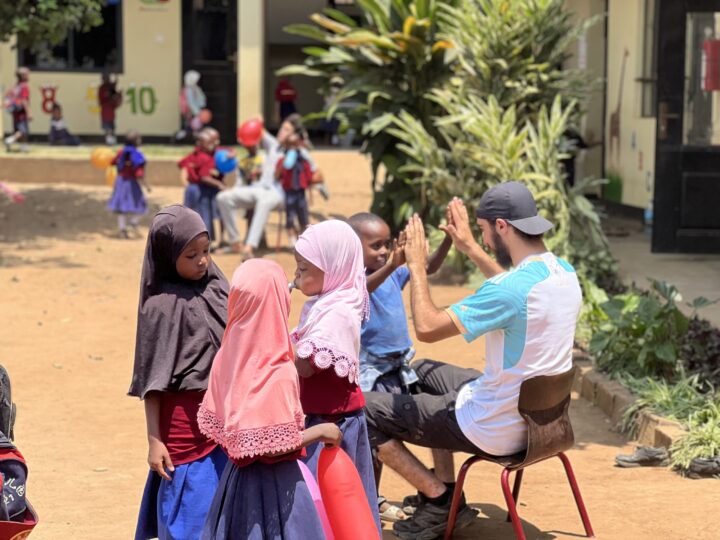
A typical day might include helping with morning learning activities, supporting reading or counting practice, and joining outdoor play. You work under the direction of local teachers or carers. Tasks are practical and age-appropriate.
You may prepare simple materials, sit with a small group, or assist during transitions between activities. The goal is to give children more individual attention than a single adult can provide alone in a busy room.
Everyone on the team — local staff and volunteers — shares responsibility for a calm, positive environment. Inclusive practice means adapting support so children with different needs can take part fully.
Afternoons often shift toward after-school or enrichment activities. The rhythm is steady rather than chaotic. That structure helps both the children and the volunteers settle into useful routines.
Materials are often simple. Creativity matters more than expensive resources. A volunteer who can turn basic supplies into an engaging activity adds immediate value in settings where budgets are tight.
After School Volunteer Support
After school volunteer sessions extend learning and play beyond the formal classroom day. Homework help, reading clubs, sports, and creative activities are common. These hours matter especially for children who have limited support at home.
Your role remains supervised. Local staff set the plan. You contribute energy, patience, and consistent presence. Over weeks, children begin to recognise and trust the adults who show up regularly.
These sessions also give older children a safe place to spend the late afternoon. That protective effect is as important as the academic content.
Consistency of attendance from volunteers helps. Children notice who returns each week. Building that reliability is one of the quiet contributions you can make beyond any single activity.
Program structure and current openings are reflected in our wider offerings; see the portfolio for examples of past and ongoing work.
Who a Childcare Volunteer Tanzania Role Suits
This placement suits people who enjoy working with children and can follow clear boundaries. Students exploring education or social-care careers often apply. Career changers and career-break travellers with relevant experience also join.
You do not need a formal teaching qualification. Patience, reliability, and respect for local staff matter more. Previous experience with children is helpful but not always required if you are willing to learn quickly.
The role is inclusive of different backgrounds and abilities as long as the physical and emotional demands of the setting can be met. Discuss any access needs during the application process so the team can advise honestly.
Minimum age is typically 18. Longer stays allow stronger relationships with the children and the team. Short stays still contribute when expectations are realistic.
Skills You Gain as a Children’s Education Volunteer
You develop practical classroom and care skills: explaining ideas simply, managing small groups, and adapting when plans change. Communication improves through daily work with children and local colleagues.
Cross-cultural competence grows. You learn to listen first and to respect different approaches to learning and discipline. These skills transfer to many future roles in education, care, and community work.
Reflection becomes a habit. Noticing what engaged a child and what did not sharpens your judgement. Many past volunteers list these experiences on CVs and in applications for further study.
Confidence in working with groups also rises. Supporting young learners in a real setting is different from reading about it. The experience is concrete and memorable.
Impact on Young Learners
Children gain extra adult attention. In busy rooms, that attention can mean the difference between keeping up and falling behind. Reading practice, counting games, and patient listening all help.
Emotional support matters too. A consistent, kind adult presence builds trust. For children facing instability at home, that reliability is valuable.
The impact is real yet modest. One volunteer does not transform a whole program. Steady, respectful support over weeks does improve daily conditions for the children you work with. That is the honest measure of success.
Feedback from local staff guides improvement. Listening to their priorities keeps the placement useful rather than driven only by the volunteer’s preferences. Partnership, not performance, is the standard.
Ethical frameworks for working with children, including guidance from the Better Care Network, emphasise family and community-based approaches. Our placements are designed to support, not replace, those systems.
How to Apply for a Childcare or Education Placement
Applications include basic details, motivation, and preferred dates. A background check is required. The team reviews fit against current partner needs and supervision capacity.
Once accepted, you receive preparation materials and placement information. Orientation on arrival covers child protection, daily routines, and practical living arrangements.
Start early if you have fixed travel dates. Peak periods fill faster. Flexible dates make matching easier. You can begin through the main program routes or by writing via contact us.
Related professional pathways, including internships, are outlined on the internship page if you are comparing options.
Childcare Volunteer Tanzania FAQs
Will I be left alone with children?
No. All roles are supervised. Local staff remain responsible. You work as part of a team under clear child-protection rules.
Do I need teaching qualifications?
No. Patience, reliability, and willingness to follow guidance are the main requirements for most children’s education volunteer roles.
Is this the same as orphanage volunteering?
Our focus is education and childcare support in structured settings. We prioritise approaches that align with child-protection best practice rather than institutional tourism.
How long should I stay?
A few weeks is a practical minimum. Longer stays allow deeper relationships and more consistent support for the children.
How do I start?
Contact the team with your dates and background via contact us, or explore related options on the internship and portfolio pages.
Support Young Learners — Apply
Ready to contribute as a childcare volunteer Tanzania participant? Tell us your dates and experience. We will match you with a supervised children’s education role that puts child protection and real learning first.