Teaching Volunteer Tanzania: Make a Real Classroom Impact
Join a teaching volunteer Tanzania program and teach English abroad Tanzania with real classroom support. This guide covers the daily work, skills you gain, who it suits, and how to apply as a volunteer teacher Tanzania placement.
Teaching Volunteer Tanzania: Program Overview
A teaching volunteer Tanzania placement puts you in real classrooms. You support local teachers and help students practise English and other subjects. The work is practical, structured, and supervised.
Many people search for ways to teach English abroad Tanzania. This program answers that search with clear roles, orientation, and ongoing support. You do not need to be a qualified teacher. You do need patience, clear communication, and respect for local staff.
Volunteers Tanzania places volunteer teacher Tanzania participants in schools and learning centres that have requested help. The goal is to strengthen existing teaching, not replace it. For more about the organisation, see our about us page. Background on education access in the region is available from UNICEF Tanzania Education.

A Day in the Life of a Volunteer Teacher Tanzania
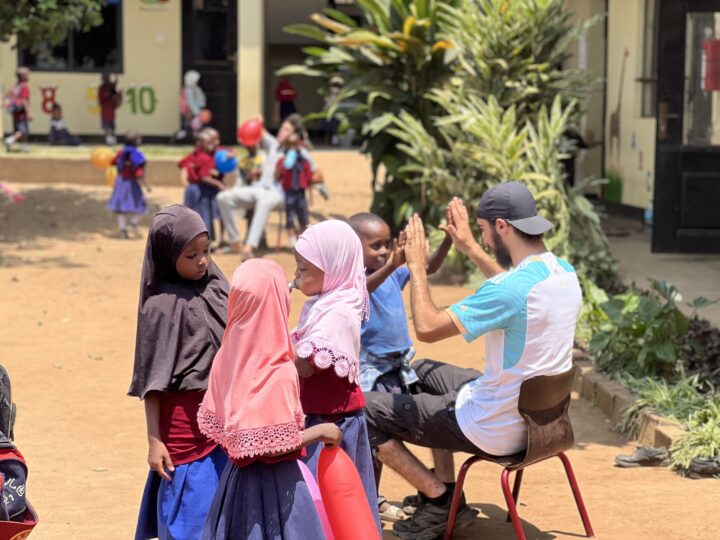
Most days start early. You travel to the school with other volunteers or by local transport. Classes often begin mid-morning. You may lead a lesson, support small groups, or help with reading and speaking practice.
Breaks give time to talk with local teachers. They know the students and the curriculum. Working with them is the best way to make your help useful. After lunch there may be more classes or after-school activities such as clubs or sports.
Afternoons can include lesson planning or simple materials preparation. Evenings are free for rest, language practice, or time with your host community. The rhythm is steady rather than chaotic. That structure helps both students and volunteer teacher Tanzania participants settle in.
Weekends are usually free. Many volunteers explore nearby areas or join cultural activities. The balance between work and free time is part of what makes teaching abroad in this setting sustainable.
Who a Teaching Volunteer Tanzania Program Suits
The program suits people who want hands-on classroom experience. Students considering a teaching career often join. Graduates taking a gap period also apply. Career changers who want to test teaching abroad find it useful too.
You do not need formal teaching qualifications. Clear spoken English and a willingness to prepare simple lessons are enough to start. Previous experience with children helps but is not required.
The placement works best for those who can stay at least a few weeks. Longer stays allow stronger relationships with students and staff. Short stays still contribute, yet the impact grows with time.
If you prefer structured learning goals and a defined role, this teaching volunteer Tanzania option is a strong fit. Related pathways such as our internship programs may also interest you.
Skills You Gain as a Volunteer Teacher Tanzania
Classroom time builds practical skills fast. You learn to explain ideas simply. You manage groups of different ages and levels. You adapt when materials are limited.
Communication improves. You speak more clearly and listen more carefully. Cross-cultural skills grow because you work daily with local teachers and families.
Planning and organisation also develop. Even short lessons need structure. Over weeks you refine what works and drop what does not. Many past participants list these skills on CVs and in university applications.
Confidence in front of a group is another common gain. Standing in front of thirty students teaches composure that transfers to many other settings.
Curriculum Tips for Teaching Abroad Tanzania
Local schools follow national guidelines. Your role is to support, not rewrite, that framework. Focus on English speaking, reading, and basic writing when that is the need. In other subjects you may help with revision or practical activities.
Keep lessons short and active. Songs, games, and pair work keep energy high. Visual aids help when language levels vary. Simple materials such as flashcards or shared story books go a long way.
Ask the class teacher what the week’s goals are. Align your activities with those goals. That cooperation makes a volunteer teacher Tanzania placement more effective and more welcome.
Reflect after each day. Note what held attention and what did not. Small adjustments compound over the weeks of your teaching volunteer Tanzania stay. For general guidance on effective teaching practices, see resources from the UNESCO Education pages.
Placement Structure and Support
Placements are arranged with schools that have asked for help. You receive an orientation before you start. That covers local expectations, basic classroom management, and practical living details.
A local coordinator remains available during your stay. They help with questions about the school, transport, or daily life. You are not left to figure everything out alone.
Accommodation is organised as part of the program. Living arrangements vary by location. The aim is safe, simple housing close enough to the placement for a manageable daily routine.
This structure is what separates a supported teaching volunteer Tanzania experience from unstructured travel. Clear roles and backup support protect both the volunteer and the host school.
Requirements and How to Prepare
Most applicants need to be at least 18. A basic level of fitness helps because school days can be long and transport basic. A clean background check is usually required.
Bring patience and flexibility. Schedules can shift. Resources may be limited. The ability to stay calm and positive matters more than perfect lesson plans on day one.
Before you arrive, read about Tanzania’s education context. Learn a few Swahili greetings. Pack modest clothing suitable for a school setting. These small steps show respect and make the first weeks smoother.
If you have questions about fit or timing, contact us. The team can advise on current openings and preparation steps. Official travel advice is published by your home country foreign office (for example the UK FCDO Tanzania page).
Impact of a Volunteer Teacher Tanzania Placement
Students gain extra practice in English and other subjects. Smaller group attention helps those who struggle in large classes. Local teachers gain a colleague who can share the load for a period.
The impact is real yet modest. One volunteer does not transform a school. Consistent, respectful support over weeks does improve daily learning conditions. That is the honest measure of success.
Past volunteers often report that the experience changed their own view of teaching and of cross-cultural work. The exchange runs in both directions.
How to Apply for a Teaching Volunteer Tanzania Program
Applications are straightforward. You submit basic details, motivation, and preferred dates. The team reviews fit and current school needs. Once accepted, you receive preparation materials and placement information.
Start the process early if you have fixed travel dates. Peak periods fill faster. Flexible dates make matching easier.
You can begin through the main program pages or by reaching out directly. The internship section also lists related opportunities if teaching is one of several interests.
Teaching Volunteer Tanzania FAQs
Do I need a teaching qualification?
No. Clear English and a willingness to prepare simple lessons are the main requirements for most teaching volunteer Tanzania roles.
How long should I stay?
A few weeks is the practical minimum. Longer stays allow deeper relationships and more consistent support for students.
Will I teach alone?
You usually work alongside local teachers. The aim is support and shared classroom time, not solo responsibility for a full curriculum.
Is the program only for English teaching?
English is the most common request. Some placements also involve other subjects or after-school activities depending on school needs.
How do I start the application?
Contact the team with your dates and background. You can use the contact us page or apply through the program listings.
Apply for the Teaching Volunteer Program
Ready to teach English abroad Tanzania in a supported classroom setting? Tell us your dates and experience. We will match you with a teaching volunteer Tanzania placement that fits.